How AI transforms photo editing for couples in 2026
Many couples worry that AI removes the emotional heart from their romantic photos. They imagine cold algorithms replacing the warmth and intimacy that makes their relationship unique. The truth flips this assumption completely. AI doesn’t erase authenticity in couple photography. Instead, it automates tedious technical work while preserving the exact facial features, expressions, and emotional connection that make each partnership recognizable. This guide reveals how AI reshapes romantic photo editing, from bulk retouching workflows to creating future family visualizations that genuinely capture your identity.
Table of Contents
- How AI Automates High-Volume Photo Editing For Couples
- Maintaining Authentic Couple Identity With AI-Generated Portraits
- Datasets And Technical Challenges In Multi-Person AI Photo Editing
- Balancing AI’s Benefits With Emotional Authenticity And User Trust
- Explore AI-Powered Romantic Photo Solutions With PairFuse
- Frequently Asked Questions About AI In Couples’ Photo Editing
Key takeaways
| Point | Details |
|---|---|
| Automation efficiency | AI handles repetitive tasks like color correction and culling across hundreds of couple photos |
| Identity preservation | Structured prompts and reference images help AI maintain facial consistency and emotional authenticity |
| Technical foundations | Datasets like PairHuman with 100K+ images advance dual-person portrait generation quality |
| Perception challenges | Anti-AI bias exists, with identical images rated lower when labeled AI-generated |
| Hybrid approach | Combining AI automation with human oversight delivers the best balance of efficiency and trust |
How AI automates high-volume photo editing for couples
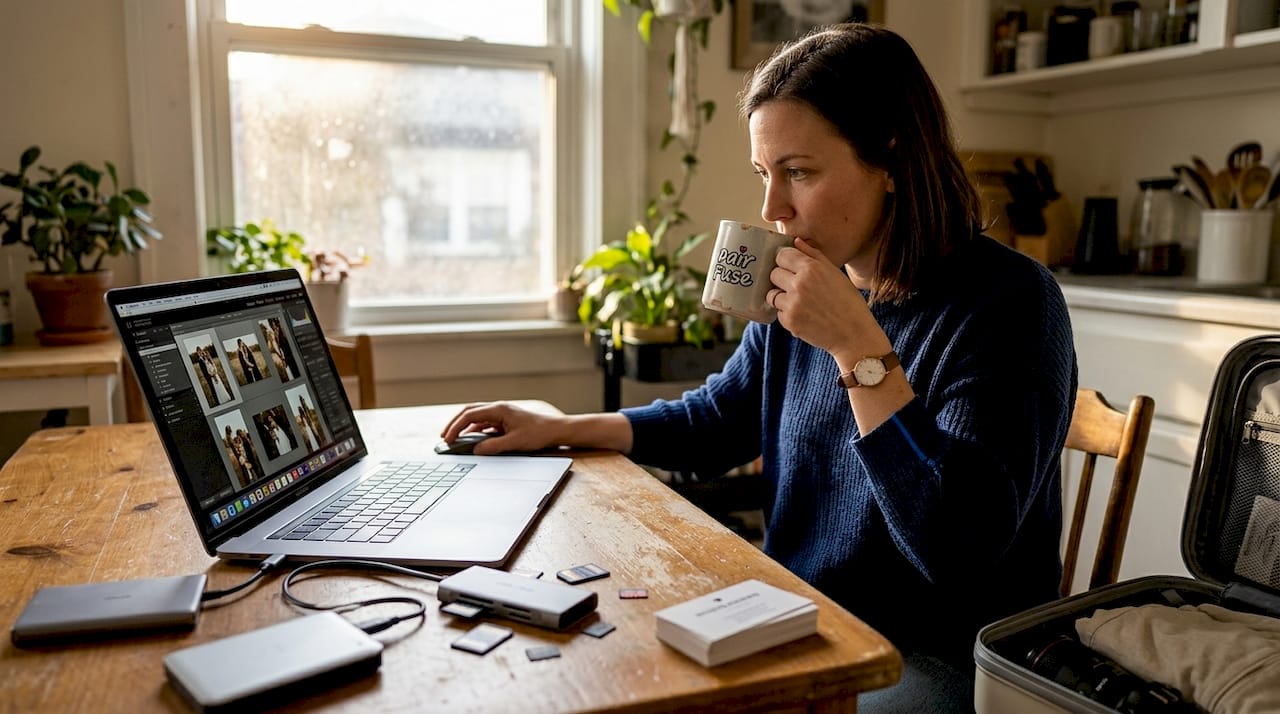
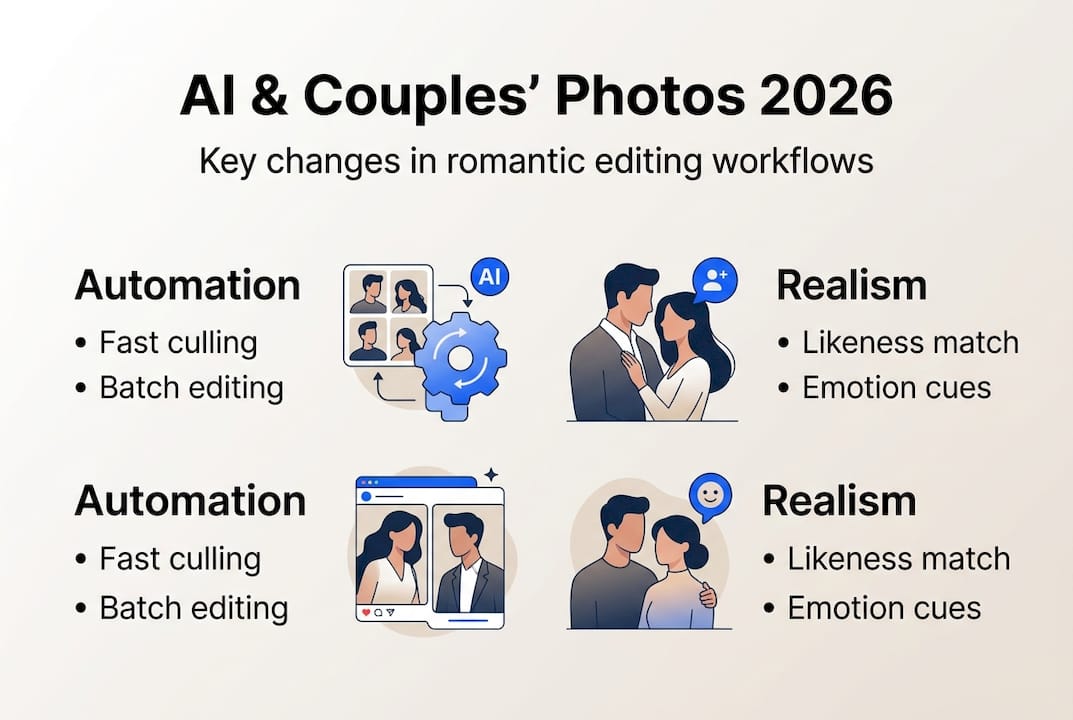
Photographers shooting weddings or romantic sessions often face 800 to 1,200 raw images per event. Manually culling, color correcting, and retouching each frame consumes days of billable time. AI automates repetitive tasks like exposure adjustment, skin smoothing, and white balance correction across entire galleries. The system learns your preferred aesthetic from past edits, then applies that consistent look to new batches of couple photos.
This workflow transformation matters most for high-volume romantic photography. AI culls obvious rejects based on focus, composition, and facial expressions. It applies your signature color grading to every keeper image. You spend creative energy on the 50 final selects instead of grinding through technical fixes on 800 raw files. The couple receives a cohesive visual story with uniform lighting and tone, whether their photos capture sunset portraits or indoor reception moments.
Pro Tip: Train your AI editing profile on 200 to 300 hand-edited couple photos before automating full wedding galleries. This sample size teaches the system your specific preferences for skin tones, contrast levels, and romantic mood lighting.
The efficiency gain compounds across multiple shoots. Photographers report cutting post-production time by 60 to 70 percent after implementing AI editing systems. That recovered time flows into client consultations, creative planning, or simply taking on more bookings. For couples, faster turnaround means receiving polished galleries within days instead of weeks, while the photographer maintains creative control over the final aesthetic.
Key automation capabilities for romantic photography:
- Intelligent culling based on sharpness, composition rules, and facial detection
- Batch color grading that matches your established style profiles
- Portrait retouching for skin texture, blemish removal, and eye enhancement
- Exposure recovery for backlit or unevenly lit romantic scenes
- Consistent cropping and straightening across gallery sequences
The technology handles mechanical precision tasks. You focus on emotional storytelling and creative direction. This division of labor produces higher quality romantic imagery at sustainable production speeds. AI photography platforms designed for couples leverage this automation to deliver professional results without requiring users to master complex editing software.
Maintaining authentic couple identity with AI-generated portraits
Generating convincing AI portraits of two people together introduces complexity beyond single-subject images. The system must preserve each person’s unique facial structure, match their poses naturally, and create believable spatial relationships. Structured prompts defining identity from reference photos, lighting conditions, and interaction details help AI maintain consistency across both faces simultaneously.
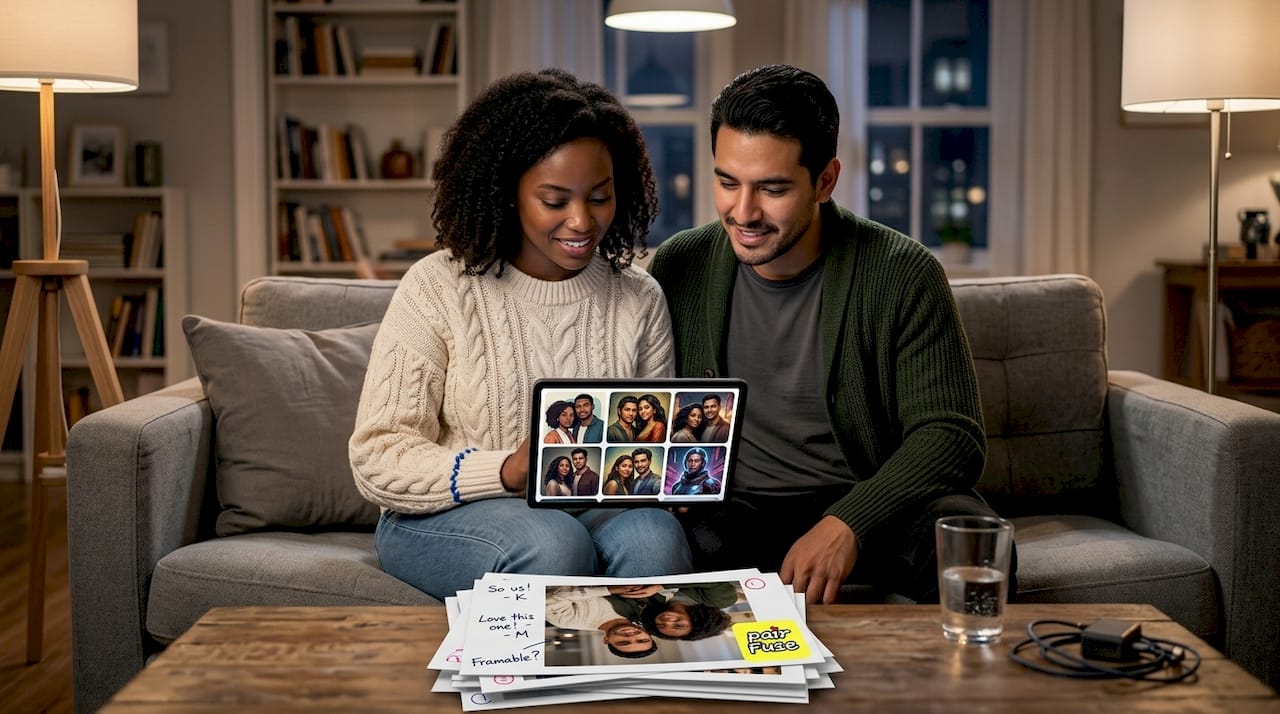
Your reference images determine output quality more than any other factor. Upload 8 to 12 photos of each person showing varied angles, lighting conditions, and expressions. The AI analyzes bone structure, eye spacing, nose shape, and dozens of other facial landmarks to build an identity model. Clean, well-lit reference photos with neutral backgrounds produce the most accurate results. Avoid heavily filtered or dramatically shadowed source images that obscure true facial features.
Common AI errors in couple portraits reveal the technology’s current limitations. Face swapping occurs when the system confuses which identity belongs to which body position. Unnatural spacing happens when the AI places partners too far apart or uncomfortably close, breaking the authentic chemistry real couples display. Inconsistent lighting between the two people creates a composite feel instead of a unified scene. These mistakes signal the need for more precise prompting and better reference material.
Steps to improve AI couple portrait realism:
- Provide reference photos with matching lighting angles for both people
- Specify exact pose descriptions including hand placement and body orientation
- Define emotional context like “laughing together” or “intimate gaze”
- Request consistent depth of field and background blur across both subjects
- Review outputs for facial feature accuracy before accepting final images
- Iterate prompts based on which elements the AI struggles to capture correctly
Pro Tip: Test your AI portrait system with a simple two-person composition before attempting complex romantic scenarios. A straightforward side-by-side portrait reveals whether the platform can handle dual-face consistency before you invest time in elaborate scene descriptions.
Emotional connection emerges from subtle pose details the AI must interpret correctly. The angle of a head tilt toward a partner, the relaxed positioning of intertwined hands, the genuine smile that reaches the eyes instead of a forced expression. Best practices for AI portraits emphasize controlling these micro-interactions through detailed prompts. When the system nails these nuances, the resulting image feels authentic despite being fully generated. When it misses them, viewers immediately sense something artificial in the couple’s dynamic.
“The difference between a good AI couple portrait and an obviously synthetic one comes down to whether the system preserves the small physical cues that signal real emotional intimacy between partners.”
Datasets and technical challenges in multi-person AI photo editing
The PairHuman dataset containing 100K+ images provides the technical foundation for advancing dual-person portrait generation. This benchmark collection trains AI models specifically on couples, wedding parties, and other two-person compositions instead of relying on single-subject datasets. The DHumanDiff baseline model built on this data improves facial consistency between partners and creates more believable scene compositions where both people occupy the frame naturally.
Training data quality directly impacts output realism. Generic image datasets include mostly solo portraits or crowd scenes with distant figures. PairHuman focuses on close romantic and formal portraits where both faces need sharp detail and accurate identity preservation. This specialized focus teaches AI systems the spatial relationships, lighting patterns, and compositional rules specific to couple photography.
| Technical Challenge | Impact on Couple Photos | Current Solutions |
|---|---|---|
| Dual-reference fusion | Clothing or accessories transfer between people incorrectly | Separate identity models for each person |
| Face blending errors | Features from both people merge into unrealistic composites | Stricter facial landmark preservation |
| Missing cue hallucination | AI invents details not present in references | Higher-quality training data with complete scenes |
| Regeneration vs editing | Full regeneration changes too much; editing changes too little | Hybrid approaches with masked regeneration |
Clothing transfer represents a persistent edge case problem. The AI might dress one partner in the other’s outfit or blend their clothing styles into impossible combinations. Scene insertion failures occur when the system places people in backgrounds that don’t match the lighting or perspective of the reference photos. These technical editing challenges reveal the gap between single-person AI photo editing and the complexity of maintaining two distinct identities in one coherent image.
Hallucination of missing visual cues damages trust in AI-generated romantic photos. If the reference images show a couple in casual clothing but the prompt requests formal attire, the AI must invent details about suits, dresses, and accessories. These invented elements often look plausible individually but fail to match each person’s actual style or body proportions. The resulting image feels “off” even if viewers can’t pinpoint exactly why.
Common dual-person generation difficulties:
- Inconsistent skin tones between partners despite identical lighting prompts
- Unnatural hand positioning when couples hold hands or embrace
- Depth perception errors making one person appear in front when they should be beside their partner
- Facial expression mismatches where emotional intensity differs between the two people
- Background elements that interact incorrectly with one person but not the other
True editing versus complete regeneration creates a credibility dilemma. Pure editing preserves the original photo’s authenticity but limits creative possibilities. Full regeneration enables any romantic scenario but risks producing obviously artificial results. Datasets advancing family photo generation attempt to bridge this gap by training models that can modify specific elements while maintaining overall photographic integrity. The technical challenge lies in teaching AI which aspects of an image to preserve for identity consistency and which to alter for creative enhancement.
Balancing AI’s benefits with emotional authenticity and user trust
Measurable anti-AI bias affects romantic image ratings in documented studies. Researchers presented identical couple photos to viewers, labeling some as human-created and others as AI-generated. The AI-labeled images received consistently lower ratings for emotional warmth and relationship authenticity, with an effect size of d=0.21. This bias persists even when the actual image quality matches or exceeds human photography.
The perception gap creates practical challenges for couples using AI tools to create romantic memories. A technically perfect AI portrait might feel emotionally hollow to friends and family if they know its origin. This psychological resistance stems from assumptions that machines cannot capture genuine human connection. The irony is that AI systems analyzing facial expressions, body language, and compositional harmony often identify authentic emotional moments more consistently than human photographers working under time pressure.
Maintaining strict identity preservation becomes crucial for overcoming trust barriers. When an AI-generated couple photo looks exactly like both people, down to specific freckles, eye color variations, and hair texture, viewers accept it more readily. The uncanny valley effect triggers when facial features drift slightly off from reality. A nose that’s 5 percent too narrow or eyes spaced 3 millimeters too far apart creates subconscious discomfort that undermines emotional authenticity.
Strategies to maintain authenticity in AI couple photos:
- Use high-resolution reference images showing fine facial details clearly
- Verify that generated images match specific identifying features like birthmarks or scars
- Choose natural poses and expressions instead of exaggerated romantic clichés
- Apply subtle editing that enhances rather than transforms original characteristics
- Be transparent about AI involvement when sharing images with others
Transparency and hybrid workflows improve social acceptance of AI romantic photography. Couples who explain they used AI to create additional styled portraits alongside traditional photos face less skepticism than those presenting AI images as conventional photography. The hybrid approach positions AI as a creative tool rather than a replacement for authentic moments. Professional photographers adopting this model offer clients both traditional shoots and AI-enhanced creative sessions, letting couples choose their comfort level.
“Trust in AI-generated romantic images grows when the technology clearly serves the couple’s vision instead of replacing their authentic connection with algorithmic assumptions about what romance should look like.”
Dataset diversity directly impacts whether AI perpetuates or reduces visual inequalities in romantic photography. Training data dominated by one ethnic group, body type, or age range produces systems that handle those demographics well but struggle with others. Couples from underrepresented groups may find AI tools generate less accurate likenesses or default to stereotypical representations. Authentic AI photo generation requires training datasets that reflect the full diversity of real relationships, ensuring every couple receives equally high-quality, personally accurate results.
Explore AI-powered romantic photo solutions with PairFuse
Now that you understand how AI transforms couple photography through automation and personalization, you can apply these insights with purpose-built tools. PairFuse specializes in creating photorealistic romantic images that preserve your unique facial features and emotional connection. Upload photos of both partners and generate studio-quality couple portraits across themes from intimate moments to editorial-style sessions, all without booking photographers or studios.

The platform’s studio photoshoot generator recreates professional lighting and composition virtually, producing images where both people look unmistakably like themselves. For couples planning families, the AI baby generator visualizes what your future child might look like by blending visible characteristics from both parents into realistic infant portraits. These tools emphasize emotional authenticity and recognizable identity, delivering results that feel personal rather than generic. Explore free demos to see how AI can capture your relationship’s unique story.
Frequently asked questions about AI in couples’ photo editing
How accurate is AI at capturing couple likeness?
AI accuracy depends entirely on reference photo quality and the platform’s facial analysis capabilities. Systems trained on diverse couple datasets like PairHuman can preserve specific facial features, skin tones, and proportions with 85 to 95 percent accuracy when given clear, well-lit reference images. Optimizing AI photo results requires uploading 8 to 12 varied photos per person showing different angles and expressions.
What are the limitations of AI in romantic photo editing?
AI struggles with subtle emotional cues like genuine smiles versus forced expressions, natural body language between partners, and consistent hand positioning during embraces. Technical challenges include clothing transfer errors, inconsistent lighting between the two people, and hallucination of missing details when prompts request elements not visible in references. These limitations improve as training datasets expand and models become more sophisticated.
How can couples ensure emotional authenticity in AI photos?
Choose poses and expressions that reflect your actual relationship dynamic rather than generic romantic stereotypes. Provide reference photos capturing genuine moments together, not staged portraits. Review generated images for specific identifying features like eye color, facial structure, and natural expressions. Transparency about AI involvement when sharing images helps maintain trust with friends and family who view your photos.
Are AI-generated couple photos accepted socially?
Acceptance varies by context and transparency. Studies show measurable bias against images labeled as AI-generated, even when quality matches human photography. However, couples who present AI images as creative additions to traditional photos rather than replacements face less skepticism. Younger demographics generally show higher acceptance of AI romantic imagery than older generations. Social acceptance grows as the technology becomes more familiar and output quality improves.
What practical tips improve AI photo outcomes for couples?
Upload reference photos with matching lighting conditions for both people to ensure consistent illumination in generated images. Specify exact pose details including hand placement, head angles, and emotional context in your prompts. Start with simple two-person compositions to test the platform’s dual-face consistency before attempting complex romantic scenarios. Iterate based on which elements the AI captures accurately versus which require prompt refinement. Choose platforms specifically designed for couple photography rather than general-purpose AI image generators.