How to Generate AI Family Photos with True Likeness: The Effortless Guide for 2026
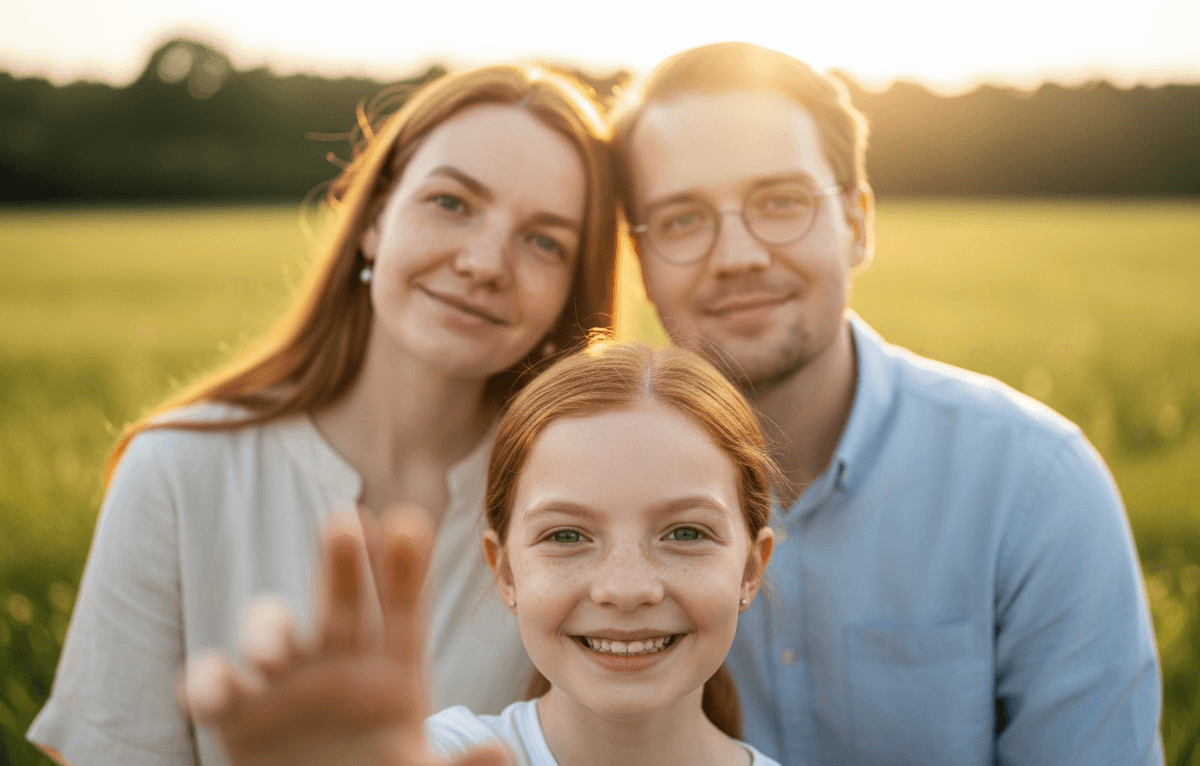
Creating AI-generated family photos that genuinely capture your true appearance and emotional connection is now achievable with specialized tools and proven techniques. Many couples want personalized images that preserve authentic facial identity rather than generic AI art, while others seek realistic visualizations of future children blending parental traits. This guide shows you how to generate high-quality AI family photos using advanced methods, specialized platforms, and best practices that ensure your images look like real photographs with recognizable features and natural warmth.
Table of Contents
-
Understanding AI Family Photo Generation: Technology And Challenges
-
Preparing To Generate AI Family Photos: Requirements And Tools
-
Step-By-Step Guide To Generating Personalized AI Family Photos
-
Ensuring Quality And Authenticity: Troubleshooting And Common Pitfalls
-
What Can I Do If My AI-Generated Family Photo Looks Unrealistic?
-
Are There Privacy Or Bias Concerns With AI Family Photo Generation?
Key takeaways
| Point | Details |
| Identity Preservation is crucial | High-fidelity morphing requires mapping up to 468 facial points to preserve true identity and achieve photorealistic results, completely avoiding the “plastic” look. |
| Legacy GANs vs. PixelDiT | Older AI baby generators relied on cartoonish GANs. Next-generation platforms use Pixel-based Diffusion (PixelDiT) to preserve organic skin texture and inherited traits. |
| The Deterministic Workflow | Avoid platforms requiring manual “semantic controls” or prompting. Professional cinematic themes should be pre-configured for a guaranteed result. |
| Overcoming the distance (LDR) | You don’t need to be in the same room. Upload separate selfies to generate flawless family portraits, perfect for Long Distance Relationships. |
| Save $500+ on studio sessions | Get lab-grade, professional family photos in minutes without the stress of coordinating a 3-hour physical photoshoot with children. |
Understanding AI family photo generation: technology and challenges
AI image generation relies on Generative AI (GenAI), which uses complex algorithms to create new images based on user prompts. These systems learn patterns from massive datasets containing millions of photographs, then synthesize entirely new images that reflect statistical associations rather than genuine understanding. When you request a family photo, the AI combines learned facial structures, expressions, lighting patterns, and compositional elements to produce an original image.
However, GenAI tools lack real-world understanding and rely purely on statistical associations from training data, which can lead to potential inaccuracies in facial proportions, skin texture, or emotional authenticity. This limitation becomes especially noticeable when generating personalized family photos where precise identity preservation matters most. You need tools specifically designed for facial accuracy rather than general image creation.
AI image generation can reflect and amplify biases and stereotypes present in the training data, affecting both realism and fairness in generated family photos.
Identity preservation presents the biggest technical challenge in AI family photo generation. Standard AI image generators often produce attractive but generic faces that barely resemble the source photos. Specialized platforms address this by incorporating advanced facial analysis, biometric mapping, and landmark detection to capture subtle characteristics like eye spacing, jawline contours, nose shape, and unique expressions. Understanding these technological foundations helps you select appropriate tools and manage expectations for what AI can realistically deliver.
For best results, follow best practices for AI-generated portraits that prioritize facial recognition accuracy and natural photographic quality over stylized artistic effects.
Key considerations when evaluating AI family photo technology:
-
Training data diversity directly impacts the AI’s ability to represent different ethnicities, ages, and facial structures accurately
-
Identity preservation algorithms vary significantly between general purpose generators and specialized family photo platforms
-
Photorealism depends on advanced rendering techniques that simulate natural lighting, skin texture, and fine detail
-
Emotional authenticity requires the AI to understand and replicate genuine human expressions rather than mechanical smile patterns
Preparing to generate AI family photos: requirements and tools
Collecting high-quality input photos forms the foundation of successful AI family photo generation. Select clear, well-lit images showing full facial features without sunglasses, heavy shadows, or extreme angles. Neutral or natural expressions work best because they provide clean baseline data for the AI to analyze and blend. Multiple photos from slightly different angles help the system build a more complete facial profile.
High fidelity morphing requires accurate input data and biometric analysis to precisely map facial landmarks like eye corners, nose tip, mouth edges, and jawline points. Tools like FaceMorph Pro incorporate sophisticated biometric pipelines that measure exact distances and proportions between facial features before blending. This mathematical precision ensures the generated family photo maintains recognizable identity from both source images.
The PairFuse Difference: While professional tools like FaceMorph Pro require manual calibration, PairFuse automates the entire biometric pipeline. Our system instantly scans those 468 facial landmarks the moment you upload your photos. You get the mathematical precision of a lab-grade morphing tool with the simplicity of a mobile app.
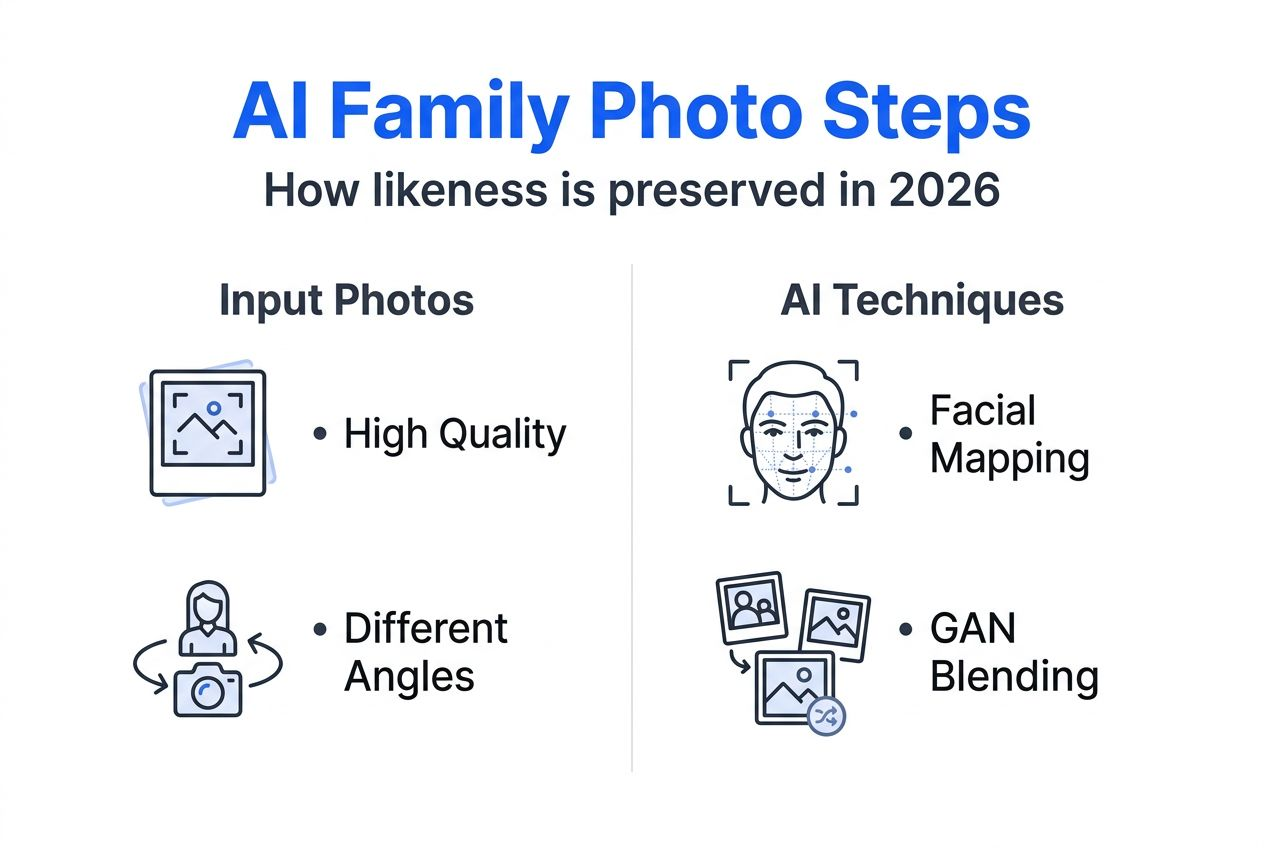
For baby visualizations specifically, older AI tools utilized basic GANs (Generative Adversarial Networks) which often resulted in cartoonish or unnatural blending. Today, specialized AI baby generators utilize advanced Identity Preservation algorithms running on Pixel-based Diffusion (PixelDiT) models. Instead of simply mashing two images together, these engines analyze dominant and recessive traits—like eye shape, jawline, and skin tone—across the 468 mapped points, creating a plausible infant face reflecting inherited characteristics.
| Tool Type / Technology | Realism Level | Key Strength | Best For |
| Legacy GAN-based models | Low to Medium | Simple image blending | Cartoonish avatars, novelty apps |
| General Latent Diffusion | Medium to High | Artistic interpretation | Creative concepts, stylized portraits |
| PairFuse AI | Hyper-Realistic | Flawless Identity Preservation & organic textures | LDR couples, $500 studio alternatives, future baby visualizations |
Google’s Gemini AI and similar advanced systems enhance detection of facial landmarks for improved accuracy in morphing operations. However, specialized platforms like PairFuse take this further by perfectly balancing technical precision with emotional warmth.
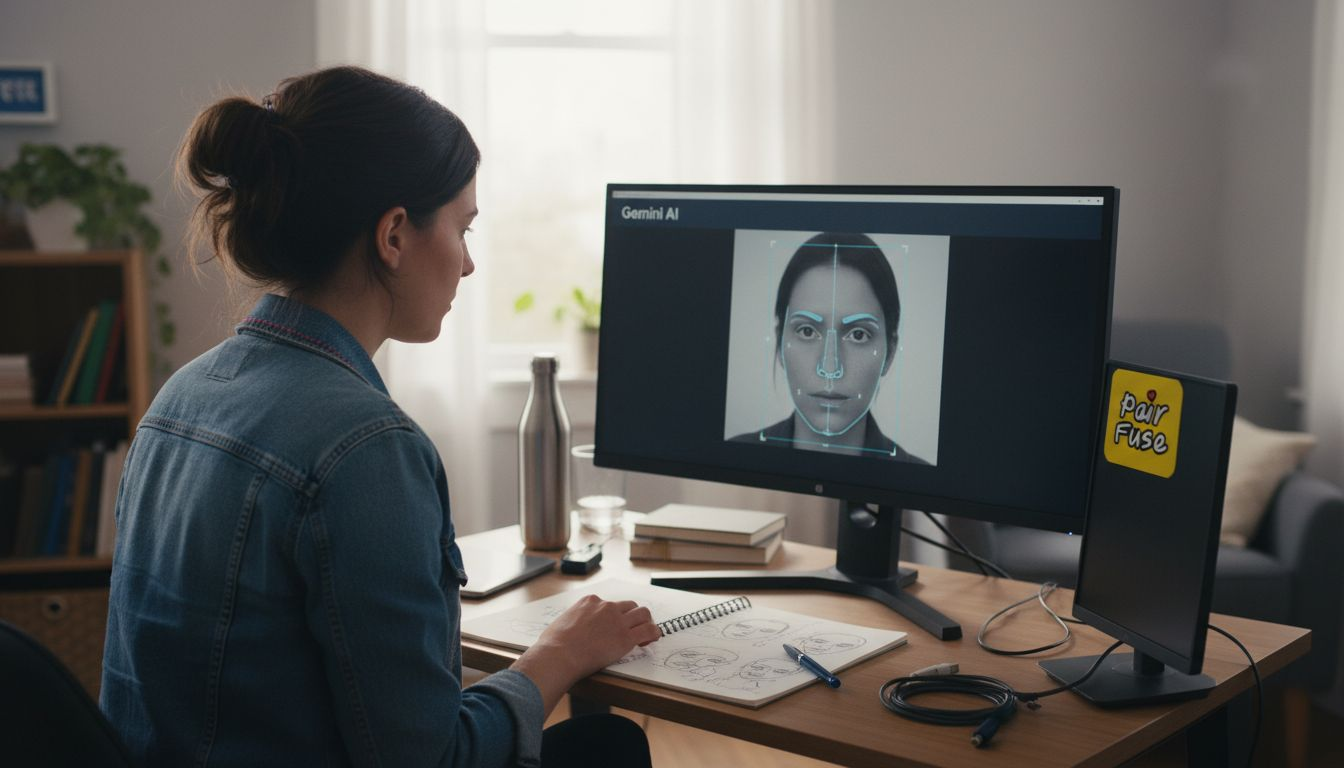
Pro Tip: Upload at least three high-quality photos of each person from slightly different angles to give the AI comprehensive facial data, resulting in more accurate identity preservation in your generated family photos.
The right tool selection balances ease of use with technical capability. Specialized platforms designed specifically for best AI photo results for couples and babies typically outperform general purpose image generators because they optimize for facial recognition, natural expressions, and photographic realism rather than artistic stylization.
Step-by-step guide to generating personalized AI family photos
Follow this systematic approach to create AI family photos that preserve authentic likeness and emotional connection:
-
Select optimal source photos: Choose images with even lighting, neutral backgrounds, and clear facial visibility for both people. Avoid photos with heavy makeup, dramatic expressions, or partial face obstruction. Front-facing shots with slight natural smiles provide the cleanest data for AI analysis.
-
Automated Biometric Mapping: Once you upload, our AI begins its work. You don’t need to manually mark eyes or lip corners. The engine identifies these points with sub-pixel precision, ensuring that the “genetic blend” in your family photos looks natural, not forced.
-
Deep Identity Integration (Not a basic “Face Swap”): This is where the magic happens. Instead of a simple and often uncanny “face swap,” PairFuse uses its PixelDiT architecture to weave your exact facial geometry (all 468 points) into the scene, preserving your authentic expressions, micro-wrinkles, and skin textures.
-
Choose a Cinematic Theme (The Deterministic Workflow): Forget about adjusting “semantic controls,” writing prompts, or manually fine-tuning age and emotion parameters. PairFuse utilizes a Deterministic Workflow. You simply select a professional theme (e.g., Studio Session, Winter Fairytale, Sunset Glow). The platform’s engine automatically applies the optimal lighting, emotional tone, and 85mm camera lens effects, ensuring professional-grade results without any manual trial and error.
-
Generate baby visualizations (if desired): For future child images, the platform analyzes both parents’ photos simultaneously. Instead of older GAN technologies, the system uses deep trait inheritance algorithms to blend features like eye color, face shape, and proportions, creating plausible, emotionally engaging infant visualizations.
-
Review and iterate: Examine generated images critically for identity consistency, natural expressions, and photographic quality. Morphing quality depends on input data accuracy and proper calibration, so regenerate with adjusted parameters if initial results don’t meet expectations.
Pro Tip: Generate multiple variations in a single session by slightly adjusting semantic controls between runs, giving you several high-quality options to choose from rather than settling for the first output.
Comparison of popular AI family photo generation methods:
| Method | Realism Level | Control Precision | Ease of Use | Best Application |
| GAN-based blending | Very High | Medium | Easy | Baby visualizations, quick couple photos |
| Biometric morphing | Excellent | Very High | Moderate | Precision family portraits, identity preservation |
| Diffusion models | Excellent | High | Easy | High-resolution couple photos, professional quality |
| Semantic control frameworks | High | Excellent | Moderate | Customized age/emotion, themed family photos |
For streamlined execution, platforms like AI couple photo maker tool and AI baby generator integrate these technical steps into intuitive interfaces, eliminating the need for manual biometric mapping or complex parameter adjustment while maintaining professional-grade output quality.
Ensuring quality and authenticity: troubleshooting and common pitfalls
Verifying identity consistency represents the most critical quality check for AI-generated family photos. Compare your generated images side-by-side with source photos, looking specifically at distinguishing features like eye shape, nose bridge angle, jawline contour, and smile characteristics. The generated photo should feel immediately recognizable rather than looking like an attractive stranger with vague similarities.
Watch for exaggerations or biased traits that may reflect patterns in the AI’s training data. AI tools can unintentionally generate biased images without careful input selection and critical review. Common manifestations include unrealistic skin smoothing, altered ethnic features, or stereotyped expressions that don’t match the source photos’ authentic characteristics.
Common quality issues and their solutions:
-
Unnatural facial distortions: Usually caused by poor input photo quality or extreme angle differences between source images. Solution: Use front-facing photos with consistent lighting and similar head positions.
-
Emotion mismatches: Generated expressions that feel forced, stiff, or inconsistent with the intended mood. Solution: This is a common flaw in generic AI tools requiring manual prompts. By using a specialized platform with a Deterministic Workflow, the emotional tone (like a genuine, warm smile) is automatically hard-coded into the chosen theme, guaranteeing an authentic connection between partners.
-
Color fidelity problems: Skin tones, hair color, or eye color that don’t accurately reflect source photos. Solution: Use high-resolution inputs with accurate color representation and verify your display calibration.
-
Identity drift: Generated faces that blend too equally, losing individual distinctiveness. Solution: Adjust morphing ratios to preserve more characteristics from each person rather than creating a perfect average.
-
The “Stranger” Effect: If the result looks like an attractive stranger, it usually means the AI had too little data. Solution: Upload 2-3 extra photos from different angles. PairFuse’s engine thrives on variety—the more angles you provide, the tighter the 468-point facial map becomes, ensuring a true-to-life likeness.
Accuracy of input data critically impacts final AI morphing quality and identity preservation, making careful photo selection your most important quality control step.
Tips to avoid common mistakes:
-
Review AI-generated outputs with fresh eyes after a short break to spot issues you might miss during initial excitement
-
Compare multiple generated variations to identify which best preserves authentic likeness and emotional tone
-
Redo problematic morphs with refined input photos or adjusted parameters rather than accepting subpar results
-
Use side-by-side comparison frameworks to objectively evaluate facial feature accuracy
Pro Tip: Create a simple checklist covering facial symmetry, feature proportion accuracy, natural skin texture, authentic expressions, and appropriate lighting to systematically evaluate each generated image before final selection.
For couples serious about accuracy in AI photo generation, investing time in proper input preparation and critical output evaluation delivers significantly better results than rushing through the generation process with suboptimal source photos.
Generate your perfect AI family photos today with PairFuse
PairFuse offers specialized AI tools designed specifically for creating photorealistic couple photos and future baby visualizations that preserve authentic likeness. Unlike general-purpose AI generators, the platform focuses exclusively on facial accuracy, natural expressions, and emotional authenticity, ensuring your generated images genuinely resemble real people rather than generic AI art.
The AI couple photo maker transforms your uploaded photos into professional-quality romantic portraits across diverse themes like studio sessions, winter fairytales, sunset aesthetics, and wedding-style photography. You receive cohesive, cinematic images without needing expensive photographers or complex technical knowledge. Simply upload clear photos of both people and let advanced facial analysis technology handle the intricate work of preserving identity while creating emotionally resonant couple imagery.
The AI baby generator provides realistic visualizations of future children by intelligently blending parental facial characteristics. Rather than producing generic infant faces, the system creates personalized baby portraits reflecting visible traits from both parents with natural softness and photographic quality. This feature appeals to couples curious about visualizing their future family or seeking unique, meaningful gifts.
What is Generative AI and how does it create family photos?
Generative AI uses sophisticated algorithms trained on massive image datasets to create entirely new images based on user inputs. These systems learn patterns, compositions, and visual relationships from millions of photographs, then synthesize original family photos that combine specified characteristics with photorealistic quality. The AI doesn’t copy existing images but generates unique outputs reflecting learned patterns about facial structure, lighting, expressions, and photographic aesthetics.
How do AI baby generators blend parents’ features?
While early AI baby generators utilized basic Generative Adversarial Networks (GANs) resulting in cartoon-like images, modern 2026 platforms use advanced Identity Preservation algorithms and Pixel-based Diffusion. The system maps up to 468 points on each parent’s face to extract structural measurements (jawline, eye shape, skin tone). It then uses deep trait inheritance models to generate a highly realistic, organically textured infant portrait that visibly shares authentic characteristics from both parents, avoiding the generic “stock baby” look entirely.
What can I do if my AI-generated family photo looks unrealistic?
Start by using high-quality, well-lit photos as inputs with clear facial features and neutral expressions. Avoid exaggerated prompts or unrealistic style requests that push the AI beyond photorealistic rendering. Regenerate with refined settings, adjusted semantic controls, or switch to a specialized tool offering biometric calibration for better identity preservation. Review multiple output variations and select the most authentic-looking result. Understanding why accuracy matters in AI photo generation helps you make better technical choices for improved results.
Are there privacy or bias concerns with AI family photo generation?
Yes, AI image generation can reflect biases and stereotypes present in training data, potentially affecting fairness and representation in generated family photos. Using responsible platforms with diverse training datasets and reviewing outputs critically helps mitigate these concerns. Privacy depends on the specific tool’s data handling practices, so choose platforms with clear privacy policies that don’t retain or misuse your uploaded photos. Specialized family photo generators typically implement stronger privacy protections than general-purpose AI art tools.
Create Memories That Don’t Require a Studio
You don’t need to coordinate a whole family for a stressful 3-hour photoshoot, and you certainly don’t need to spend $500+ on professional studio fees. Whether you’re an LDR couple separated by distance, or simply looking for the ultimate “lazy professional” photography hack, PairFuse handles the complex biometric mapping under the hood. Get high-accuracy, emotionally warm family photos in minutes using the selfies you already have.
Start Your AI Family Photoshoot with PairFuse Today →