Types of AI image generators for romantic baby photos
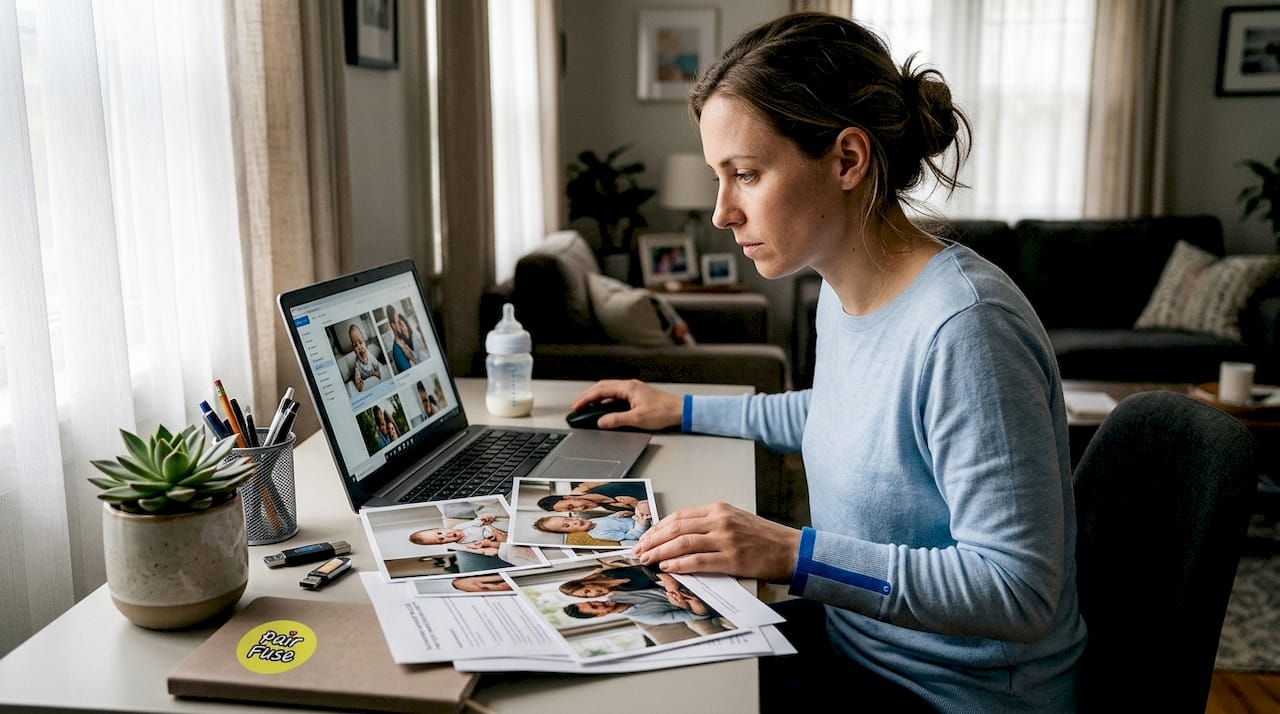
Choosing the right AI image generator can feel overwhelming when you want personalized romantic photos and realistic future baby visualizations. Different AI methodologies offer varying strengths in photorealism, identity preservation, and customization, each with distinct trade-offs for couples. This guide walks you through the main types of AI image generators, helping you understand which approach delivers the best results for creating meaningful couple portraits and baby images that genuinely capture recognizable features and natural expressions.
Table of Contents
- Key takeaways
- How to choose an AI image generator for romantic and baby photos
- Diffusion models: leading choice for photorealistic romantic and baby imagery
- Generative adversarial networks (GANs): advantages and limitations in romantic AI photos
- Variational autoencoders (VAEs): stable but less sharp image generation
- Comparing AI image generation models for couples: a side-by-side overview
- Discover personalized AI couple and baby photos with PairFuse
- FAQ
Key Takeaways
| Point | Details |
|---|---|
| Diffusion dominance | Diffusion models are the leading approach for achieving high photorealism in romantic and baby images by refining random noise through hundreds of steps. |
| Identity preservation | These models maintain recognizable facial features and natural expressions across images, helping photos feel personal. |
| Speed tradeoffs | The iterative refinement process slows generation, but hybrid diffusion approaches can speed up results without sacrificing quality. |
| Text rendering caveats | Occasional issues with rendering complex text can occur, though they rarely affect portrait focused applications. |
How to choose an AI image generator for romantic and baby photos
Selecting the right AI image generator requires evaluating several critical factors that directly impact your final results. Image quality and photorealism matter most when you want romantic portraits or baby visualizations that look genuinely lifelike rather than obviously artificial. Stability and consistency ensure you avoid distorted facial features, unnatural proportions, or bizarre anatomy that can ruin otherwise beautiful images.
Generation speed affects your experience, especially when you want to iterate through multiple variations or customize specific details. The ability to preserve identity and likeness determines whether the AI-generated images actually resemble you and your partner, maintaining recognizable facial characteristics that make the photos feel personal and authentic. Scientific nuance requires domain-expert validation over simple metrics when evaluating these trade-offs.
Consider these priorities when evaluating platforms:
- Photorealism level needed for your intended use
- Consistency across multiple generated images
- Processing time you’re willing to accept
- Identity preservation accuracy for recognizable faces
- Balance between detail sharpness and natural appearance
Understanding these criteria helps you match AI methodologies to your specific needs. Learn more about achieving optimal results through best practices for AI-generated portraits in 2026 to maximize your image quality.
Diffusion models: leading choice for photorealistic romantic and baby imagery
Diffusion models have emerged as the dominant approach for generating high-quality romantic and baby photos through iterative denoising processes. This methodology starts with random noise and gradually refines it through hundreds of steps, creating exceptionally detailed images with natural lighting, realistic skin textures, and believable facial features. Diffusion models power modern tools like DALL-E 3, Imagen 4, and Flux, delivering photorealism ideal for romantic and baby imagery.
The iterative refinement process allows diffusion models to capture subtle details that make faces look genuinely human rather than artificially generated. This precision proves essential for couple portraits where you want to maintain recognizable identity and natural chemistry between partners. For baby visualizations, diffusion excels at rendering soft infant features, delicate skin tones, and inherited characteristics that feel plausible and emotionally engaging.
Key advantages of diffusion models include:
- Superior photorealism with fine detail preservation
- Excellent facial feature accuracy and identity consistency
- Natural lighting and realistic texture rendering
- Flexibility for customization and style variations
- Continuous improvements through hybrid approaches
The main challenge involves slower generation times due to the iterative sampling process, which can take several seconds or even minutes per image. However, newer hybrid diffusion methods significantly reduce processing time while maintaining quality. Occasional issues with complex text rendering can occur, though this rarely affects portrait-focused applications. Discover how to maximize quality through best AI photo results for couples and babies in 2026 techniques.
Pro Tip: Platforms using hybrid diffusion approaches can generate images in under 10 seconds while preserving the photorealistic quality that makes faces instantly recognizable.
Generative adversarial networks (GANs): advantages and limitations in romantic AI photos
GANs operate through adversarial training where two neural networks compete, one generating images while the other evaluates their authenticity. This competitive process produces exceptionally sharp and detailed images, making GANs popular for face blending and stylized couple photos. The crisp edge definition and high-contrast details can create visually striking portraits with dramatic lighting and bold aesthetics.
However, GANs suffer from training instability and mode collapse, leading to unrealistic anatomy that particularly affects baby image generation. Mode collapse occurs when the generator learns to produce only limited variations, reducing diversity and sometimes creating distorted facial features or impossible body proportions. This instability makes GANs less reliable for photorealistic baby visualizations where natural, believable features matter most.
Key characteristics of GAN-based generators:
- Exceptional sharpness and edge definition
- Strong performance in face blending applications
- Tendency toward stylized rather than photorealistic results | Training instability causing inconsistent output quality
- Higher risk of anatomical distortions in generated images
GANs work best in specialized scenarios requiring ultra-sharp details or specific artistic styles rather than general photorealistic generation. The technology continues evolving, with newer GAN architectures addressing some stability issues. For couples prioritizing true-to-life appearance over stylistic sharpness, diffusion models typically deliver more consistent and natural results. Explore various approaches through types of AI photography for personalized photorealistic images to understand your options.
Pro Tip: If choosing a GAN-based platform, verify they use updated training models and quality controls to minimize artifacts and anatomical distortions in your couple photos.
For deeper insights into AI quality considerations, review perspectives on not settling for mediocre AI when selecting generation platforms.
Variational autoencoders (VAEs): stable but less sharp image generation
VAEs provide consistent and stable AI image outputs through probabilistic latent space representations, making them reliable for generating variations without dramatic quality fluctuations. This stability comes from encoding images into a continuous distribution rather than discrete points, allowing smooth interpolation between different visual concepts. The mathematical foundation ensures predictable results across multiple generations.
The primary limitation involves reduced sharpness and detail compared to diffusion models and GANs, producing softer, blurrier images less suited for photorealistic couple and baby photos. VAEs excel at capturing general structure and composition but struggle with fine facial details, skin texture nuances, and the crisp clarity needed for recognizable identity preservation. This makes them better suited for preliminary sketches or artistic styles rather than detailed realism.
VAE characteristics for image generation:
- Highly stable and consistent output quality
- Smooth interpolation between different image variations
- Blurrier results with less fine detail preservation
- Better for artistic or stylized applications than photorealism
- Often combined with other methods in hybrid solutions
Many modern platforms use VAEs as components within larger hybrid architectures rather than standalone generation methods. Understanding VAE limitations helps set realistic expectations when evaluating romantic AI photo creation tools. For couples seeking photorealistic portraits with sharp facial features and recognizable identity, diffusion-based platforms typically deliver superior results. Learn about essential features through premium AI photo platform features for couples and babies.
Comparing AI image generation models for couples: a side-by-side overview
Each AI methodology offers distinct advantages and trade-offs for romantic and baby imagery, making direct comparison essential for informed platform selection. Benchmarks demonstrate diffusion excels in fidelity while hybrids balance quality and speed, whereas GANs deliver sharpness but with stability concerns. Understanding these differences helps you prioritize what matters most for your specific use case.
| Model type | Image quality | Generation speed | Stability | Best use case |
|---|---|---|---|---|
| Diffusion | Excellent photorealism | Slower (5-30 seconds) | Very stable | Romantic portraits, baby photos |
| GAN | Sharp details | Fast (1-5 seconds) | Unstable | Stylized couple photos, face blending |
| VAE | Lower detail | Fast (1-5 seconds) | Very stable | Artistic styles, preliminary concepts |
| Hybrid | High quality | Medium (3-10 seconds) | Stable | Balanced photorealism with speed |
Key decision factors for couples:
- Choose diffusion for maximum photorealism and identity preservation
- Consider GANs only for stylized or artistic couple portraits
- Avoid VAEs as primary method for detailed romantic or baby photos
- Prioritize hybrid diffusion platforms for optimal quality-speed balance
- Verify platforms emphasize facial recognition and likeness accuracy
Diffusion models consistently deliver the most natural and believable results for couple portraits and baby visualizations where recognizable features matter most. GANs may appeal for specific artistic applications but introduce too much instability risk for general photorealistic use. VAEs rarely serve as standalone solutions for high-quality personal imagery. Modern hybrid approaches offer the best practical balance, combining diffusion quality with improved generation speed. Maximize your results by understanding how to make AI photos look real through proper methodology selection.
Discover personalized AI couple and baby photos with PairFuse
Now that you understand the different AI image generation approaches, you can make informed choices about creating your own romantic and baby imagery. PairFuse applies advanced diffusion-based methodologies specifically optimized for photorealistic couple portraits and future baby visualizations that preserve recognizable identity and natural expressions.

Our specialized AI couple photo maker combines your uploaded images to create stunning romantic portraits across diverse themes, from intimate studio sessions to cinematic seasonal scenes. The platform emphasizes facial accuracy and believable chemistry between partners, delivering results that look professionally photographed rather than artificially generated. Try our free AI baby generator to visualize what your future child might look like, with realistic infant features reflecting visible characteristics from both parents. Enhance your imagery further with professional studio photoshoot features that deliver editorial-quality results without complex prompting or technical expertise. PairFuse combines cutting-edge AI technology with user-friendly design, ensuring you get photorealistic, emotionally meaningful images that genuinely capture your unique identity.
FAQ
What is the most realistic AI image generator for baby photos?
Diffusion models are widely recognized as the top choice for realistic baby image generation due to exceptional fidelity in rendering soft infant features, delicate skin textures, and inherited facial characteristics. Platforms using advanced diffusion methodologies deliver baby visualizations that feel personalized and plausible rather than generic or artificial. The iterative refinement process captures subtle details that make infant portraits emotionally engaging and visually believable.
Are GANs good for generating couple portraits?
GANs can create sharp and detailed couple portraits but may suffer from training instability or unrealistic anatomical results that compromise photorealism. They excel in specialized face blending applications or stylized artistic portraits where dramatic sharpness matters more than true-to-life appearance. For general photorealistic couple imagery emphasizing recognizable identity and natural chemistry, diffusion-based platforms typically deliver more consistent and believable results.
How do VAEs compare to other AI image generators for personal photos?
VAEs offer stable and consistent image generation but produce blurrier, less detailed results compared to diffusion models and GANs. This reduced sharpness makes them less favored for photorealistic couple and baby photos where facial detail and identity preservation matter most. VAEs work better as components in hybrid architectures or for artistic applications rather than standalone solutions for high-quality personal imagery.
Why does generation speed matter for AI couple photos?
Generation speed directly impacts your ability to iterate through variations, customize specific details, and explore different themes or styles efficiently. Faster generation allows you to refine results quickly, while slower processing can make experimentation tedious. Modern hybrid diffusion platforms balance speed with quality, delivering photorealistic results in under 10 seconds rather than requiring minutes per image.
Can AI image generators preserve facial identity in couple photos?
Advanced diffusion models excel at preserving facial identity through sophisticated facial analysis that captures subtle traits, proportions, and visual characteristics making each person instantly recognizable. Platforms specifically optimized for couple imagery prioritize identity consistency alongside photorealism, ensuring generated portraits genuinely resemble uploaded photos. This capability separates specialized couple photo platforms from general-purpose AI image generators that may produce attractive but unrecognizable results.