Types of AI photography for personalized photorealistic images
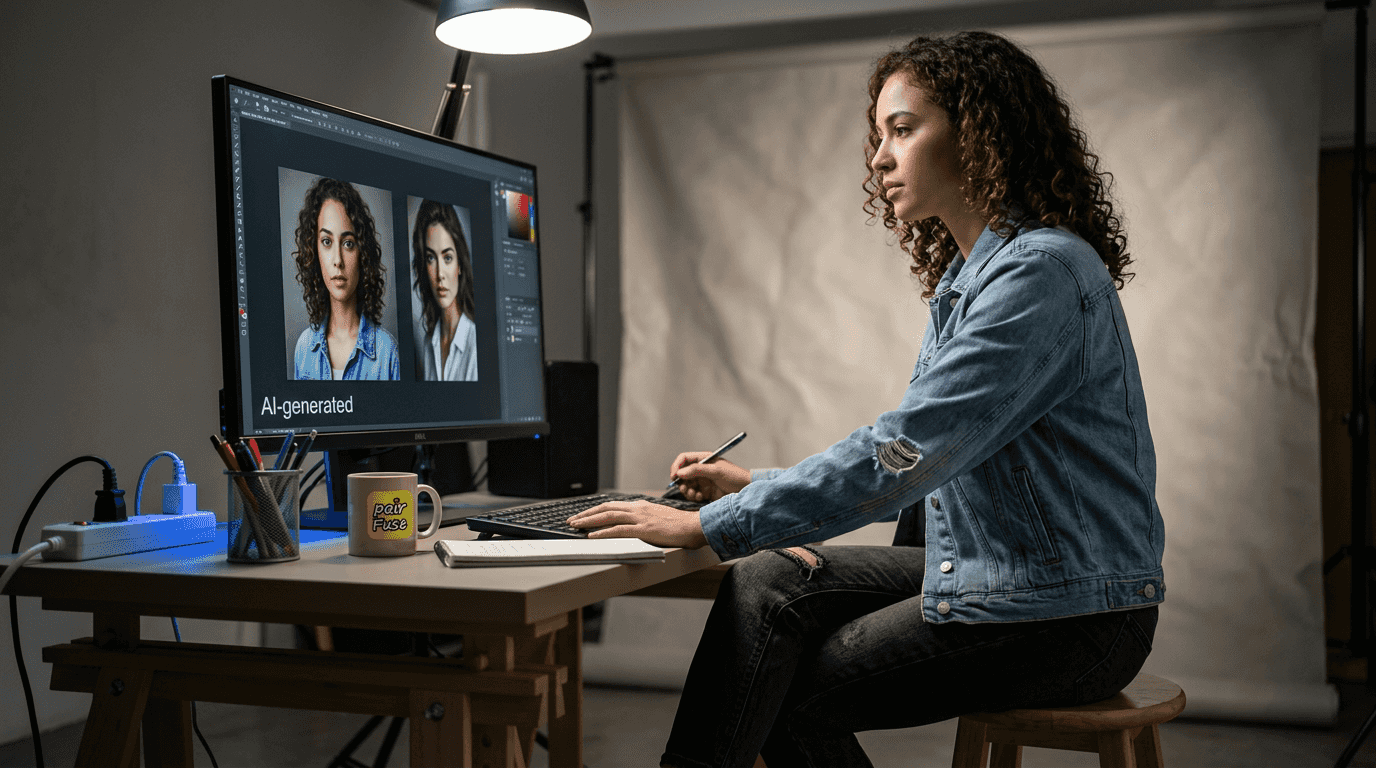
Choosing the right AI photography method can feel overwhelming when you’re searching for personalized, photorealistic images that genuinely capture your likeness or visualize your future child. With multiple AI techniques available in 2026, each offering different strengths in realism, control, and personalization, couples, gift givers, and expectant parents need clear criteria to evaluate their options. Understanding how diffusion models, GANs, and various personalization approaches work helps you select the technology that delivers authentic, emotionally resonant images rather than generic AI art. This guide breaks down the main AI photography types and shows you exactly which method fits your romantic, gifting, or family visualization needs.
Table of Contents
- How To Evaluate AI Photography Methods For Your Personalized Images
- Generative Adversarial Networks (GANS): Sharp, Realistic Image Specialists
- Diffusion Models: Precise, Controllable Photorealistic Image Generation
- Personalization Techniques In AI Photography: Tuning-Based Vs Tuning-Free Methods
- Comparing AI Photography Types: Which Best Fits Your Romantic Or Family Vision?
- Discover Personalized AI Photography With PairFuse
- Frequently Asked Questions
Key takeaways
| Point | Details |
|---|---|
| Diffusion models excel in control | These models offer superior prompt alignment and predictable photorealistic results for personalized images |
| GANs produce sharp detail | Generative adversarial networks create high-resolution images but face training stability challenges |
| Tuning-based personalization wins accuracy | Methods like LoRA and DreamBooth preserve identity exceptionally well but require more resources |
| Tuning-free methods prioritize speed | Instant personalization comes at the cost of reduced authenticity and naturalness |
| Evaluation criteria guide your choice | Assess realism, control, resources, personalization accuracy, and your specific use case |
How to evaluate AI photography methods for your personalized images
Before comparing specific AI photography technologies, you need a framework to assess which approach delivers the photorealistic, personalized images you’re seeking. The right evaluation criteria help you cut through marketing claims and technical jargon to find the method that matches your needs.
Image realism and detail quality form the foundation of any AI photography assessment. You want images that look like professional photographs, not obviously synthetic creations. Examine how well each method handles skin texture, lighting consistency, and facial feature accuracy.
Control and customization capabilities determine whether you can achieve your specific vision. Some AI methods let you fine-tune every aspect of the final image, while others offer limited creative direction. Consider how much input you want over styling, composition, and thematic elements.
Computational resources and training time impact both cost and convenience. Methods requiring extensive GPU processing or lengthy training periods may not suit users seeking quick results. Balance quality expectations against practical constraints like budget and timeline.
Personalization accuracy measures how well the AI preserves individual identity or creates believable likenesses. For couple photos, this means both partners look recognizably like themselves. For baby visualizations, it means the child plausibly reflects both parents’ features.
Different user groups prioritize different factors. Couples creating romantic images may value emotional authenticity and chemistry. Gift givers often need quick turnaround without sacrificing quality. Expectant parents want realistic, heartwarming visualizations that feel personal rather than generic.
Pro Tip: Create a simple scorecard rating each AI method on your top three priorities, whether that’s speed, identity accuracy, or creative control, to make objective comparisons.
Generative adversarial networks (GANs): sharp, realistic image specialists
GANs revolutionized AI image generation by using two neural networks in competition, one creating images and another evaluating their realism. This adversarial process produces exceptionally sharp, high-resolution images with impressive fine detail. When you examine GAN-generated photos, you’ll notice crisp edges, well-defined textures, and photographic clarity that rivals camera-captured images.
The technology excels at producing sharp, realistic images with fine details, making them suitable for photorealistic generation. However, GANs face significant challenges that limit their reliability for personalized photography. Mode collapse occurs when the generator produces limited variety, potentially creating similar-looking outputs despite different inputs. Training instability means the two competing networks sometimes fail to reach equilibrium, resulting in unpredictable quality.
GANs shine in specific applications where their strengths outweigh limitations:
- Data augmentation for facial recognition systems requiring diverse training examples
- High-resolution texture generation for detailed close-up imagery
- Style transfer applications where sharp detail preservation matters
- Scenarios where training data is abundant and well-structured
For personalized couple photography or baby visualization, GANs present control challenges. You have less predictable influence over specific facial features, expressions, or compositional elements compared to newer alternatives. The adversarial training process doesn’t naturally align with text prompts or user preferences, making it harder to achieve precisely the romantic aesthetic or family resemblance you envision.
“While GANs can generate photorealistic images, their lack of fine-grained control and training unpredictability make them less ideal for personalized photography where identity preservation and user direction are paramount.”
Understanding GAN limitations helps you recognize when this technology fits your needs versus when alternative approaches deliver better results for your specific personalized image goals.
Diffusion models: precise, controllable photorealistic image generation
Diffusion models represent a fundamental shift in AI photography, offering the control and predictability that personalized image creation demands. These systems work by gradually adding noise to training images, then learning to reverse that process, which allows them to generate new images from pure noise. This approach captures complex data distributions more effectively than competing methods.
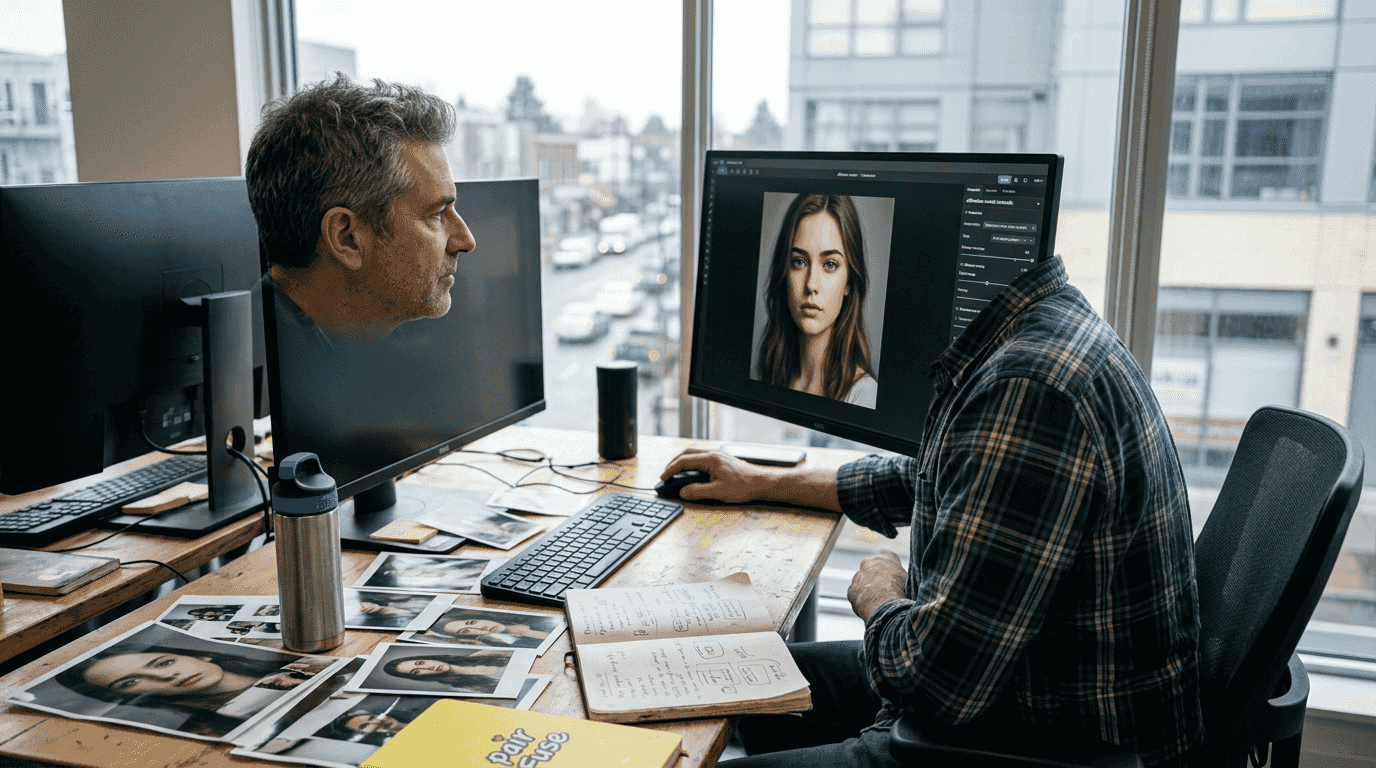
The reversible noise process gives diffusion models their signature advantage: superior control over image generation compared to GANs. You can precisely manipulate lighting conditions, adjust compositional elements, and fine-tune stylistic choices while maintaining photorealistic quality. Text prompts align more reliably with output, meaning your creative vision translates more accurately into the final image.
For couples seeking romantic photorealistic images, this control matters enormously. You can specify sunset lighting, studio backdrop preferences, or seasonal themes with confidence the model will deliver. Expectant parents visualizing their future child benefit from predictable feature blending and consistent quality across multiple generation attempts.
Diffusion models support efficient personalization through techniques like LoRA (Low-Rank Adaptation) and DreamBooth, which fine-tune the base model on your specific subjects:
- LoRA adds lightweight trainable parameters without modifying the entire model
- DreamBooth creates unique identifier tokens for specific individuals
- Both methods preserve identity while maintaining generation flexibility
- Training times range from minutes to hours depending on dataset size and quality
The table below compares key diffusion model characteristics relevant to personalized photography:
| Feature | Benefit for Personalized Images | Trade-off |
|---|---|---|
| Prompt alignment | Your creative direction translates accurately | Requires clear, specific descriptions |
| Identity preservation | Faces remain recognizable across generations | Needs quality training photos |
| Controllable elements | Adjust lighting, pose, style independently | Learning curve for advanced control |
| Generation speed | Produces images in seconds to minutes | Multiple iterations may be needed |
Pro Tip: When using diffusion models for couple photos, include specific lighting and mood descriptors in your prompts like “soft golden hour glow” or “dramatic studio lighting” to make AI photos look genuinely real rather than artificially lit.
The precision and controllability of diffusion models make them the preferred foundation for platforms focused on photorealistic personalized imagery where identity accuracy and creative direction both matter.
Personalization techniques in AI photography: tuning-based vs tuning-free methods
Once you’ve selected an underlying AI model architecture, personalization techniques determine how accurately the system captures your unique identity or creates believable family resemblances. Two distinct approaches dominate current AI photography: tuning-based methods that modify model parameters and tuning-free methods that encode identity without altering the core model.
Tuning-based approaches like LoRA fine-tuning allow efficient adaptation of diffusion models, reducing memory requirements and training time while maintaining quality. These methods adjust specific model weights based on your training images, essentially teaching the AI to recognize and reproduce your facial features, expressions, and characteristics. DreamBooth combined with LoRA enables subject-driven generation using personalized unique tokens that trigger your specific likeness.
The accuracy advantage of tuning-based personalization is substantial. When properly trained, these methods preserve subtle facial asymmetries, distinctive features, and individual characteristics that make someone instantly recognizable. For couple photography, both partners maintain their authentic appearance across different poses and scenarios. For baby visualization, inherited traits from both parents appear more naturally blended.
However, tuning-based methods require investment:
- Training datasets of 10 to 30 high-quality photos per subject
- GPU computing resources for the fine-tuning process
- Time ranging from 30 minutes to several hours depending on method and hardware
- Technical knowledge to optimize training parameters for best results
Tuning-free alternatives like IP-Adapter offer immediate personalization by encoding user identity without fine-tuning, but these methods often lack the naturalness and authenticity of tuned approaches. They work by extracting facial embeddings from reference photos and injecting them into the generation process. While convenient, the results frequently show reduced identity fidelity, less natural expressions, and occasional artifacts.
The comparison table below illustrates key differences:
| Method Type | Identity Accuracy | Speed | Resource Needs | Best Use Case |
|---|---|---|---|---|
| LoRA tuning | Excellent | Moderate (training required) | Medium GPU, storage | Repeated personalized generations |
| DreamBooth | Excellent | Moderate (training required) | Higher GPU, storage | Maximum identity preservation |
| IP-Adapter | Good | Instant | Minimal | Quick previews, casual use |
| Textual Inversion | Very good | Slower training | Medium GPU | Specific object/style learning |
Training data quality dramatically impacts tuning-based results. Specificity in image captions, consistent lighting across training photos, and varied angles all improve the model’s understanding of your subject. Blurry photos, inconsistent backgrounds, or limited pose variety reduce personalization accuracy.
Pro Tip: When preparing training images for DreamBooth or LoRA, include at least three different lighting conditions and five distinct angles to give the model comprehensive understanding of your facial structure and appearance.
For platforms prioritizing photorealistic, authentic AI portraits, tuning-based personalization delivers the identity preservation and natural appearance that users expect from premium services.
Comparing AI photography types: which best fits your romantic or family vision?
With technical details established, you need practical guidance on matching AI photography methods to your specific goals. The right choice balances your priorities around speed, accuracy, control, and the type of personalized image you’re creating.
Speed versus accuracy represents the fundamental trade-off in personalization. Tuning-free methods deliver instant results but sacrifice identity fidelity. Tuning-based approaches require upfront time investment but produce images where you and your partner genuinely look like yourselves. For gift givers working against deadlines, speed may outweigh perfect accuracy. For couples creating anniversary keepsakes or expectant parents treasuring baby visualizations, authenticity justifies the wait.
Control over final aesthetics varies significantly across methods. Diffusion models with text-to-image capabilities let you specify detailed creative direction. GANs offer less granular control, potentially requiring multiple generation attempts to achieve your desired mood or composition. Consider whether you want hands-on creative input or prefer automated aesthetic decisions.
Computational resources and technical skill requirements create practical barriers. Methods demanding GPU access, coding knowledge, or complex parameter tuning exclude users seeking simple, accessible solutions. Platforms abstracting technical complexity make advanced methods available to non-technical users, but standalone implementation requires expertise.
The use case comparison below guides your decision:
| Your Goal | Recommended Method | Key Reason | Alternative Option |
|---|---|---|---|
| Romantic couple photos | Diffusion + LoRA tuning | Identity preservation with creative control | Diffusion + IP-Adapter for speed |
| Unique personalized gifts | Diffusion + DreamBooth | Maximum authenticity and wow factor | GAN for ultra-sharp detail |
| Future baby visualization | Diffusion + tuning-based blend | Realistic feature inheritance | Tuning-free for quick preview |
| Multiple themed photoshoots | Diffusion + LoRA | Reusable personalization across themes | Full DreamBooth for best quality |
For cinematic AI photoshoots emphasizing emotional warmth and visual premium quality, diffusion models with tuning-based personalization consistently outperform alternatives. The combination delivers recognizable faces, natural chemistry between partners, and the photographic realism that separates professional results from amateur AI experiments.
Budget-conscious users should weigh one-time tuning costs against repeated generation value. If you plan creating multiple images across different scenarios, investing in quality personalization pays dividends. Single-use applications may not justify extensive tuning.
Technical accessibility matters for mainstream adoption. Platforms handling the complexity behind user-friendly interfaces make advanced AI photography available to couples and families in 2026 without requiring AI expertise. DIY approaches using open-source tools offer cost savings but demand significant learning investment.
Ultimately, your choice should align with three factors: the emotional significance of the images you’re creating, your timeline and budget constraints, and your expectations for photorealistic quality and identity preservation.
Discover personalized AI photography with PairFuse
Now that you understand the landscape of AI photography methods, you can experience their benefits through platforms designed specifically for couples, gift givers, and expectant parents. PairFuse combines cutting-edge diffusion models with tuning-based personalization to deliver photorealistic images where you genuinely recognize yourself and your partner.
The AI Couple Photo Maker creates romantic, cinematic images across diverse themes without requiring professional photography sessions or complex technical knowledge. Upload your photos, select your preferred aesthetic, and receive polished couple imagery that captures authentic chemistry and individual likeness. Whether you’re visualizing winter fairytale scenes, sunset portraits, or elegant studio sessions, the platform handles the technical complexity while you focus on creative vision.
Expectant parents can explore the AI Baby Generator to create heartwarming visualizations of their future child. Rather than generic baby faces, you’ll see personalized portraits reflecting visible characteristics from both parents, presented with the same photographic quality and natural warmth that defines premium AI imagery.
PairFuse prioritizes the identity preservation and photorealistic quality that matter most when creating meaningful personalized images. The platform abstracts the technical decisions around model selection and personalization methods, delivering professional results through an accessible, user-friendly experience.
Pro Tip: Take advantage of PairFuse’s theme variety to create coordinated image sets for special occasions, building a collection of romantic memories without the scheduling challenges and costs of traditional photography sessions.
Frequently asked questions
What is the main difference between GANs and diffusion models?
GANs use adversarial training where two networks compete, producing sharp images but offering limited control over specific elements. Diffusion models generate images by reversing a noise addition process, providing superior prompt alignment and predictable manipulation of lighting, composition, and style. For personalized photography requiring consistent identity preservation and creative direction, diffusion models typically outperform GANs.
How do tuning-based methods improve AI photo personalization?
Tuning-based methods like LoRA and DreamBooth fine-tune model parameters using your specific photos, teaching the AI to recognize and reproduce your unique facial features and characteristics. This approach preserves subtle details like facial asymmetries and distinctive traits that make you instantly recognizable. While requiring more computational resources and training time than tuning-free alternatives, they deliver significantly higher identity fidelity in the final images.
Can expectant parents rely on AI to visualize their future child accurately?
Diffusion models can generate realistic, emotionally engaging baby images based on parent photos, but these are artistic interpretations rather than genetic predictions. Results depend heavily on input photo quality, training data, and prompting specificity. The visualizations offer believable representations reflecting visible characteristics from both parents, creating meaningful previews that feel personal and plausible without guaranteeing scientific accuracy.
Which AI photography method works best for creating romantic couple images?
Diffusion models combined with LoRA or DreamBooth tuning deliver optimal results for romantic couple photography. This combination preserves both partners’ authentic appearances while allowing precise control over lighting, mood, and compositional elements. The method produces photorealistic images with natural chemistry and emotional warmth, avoiding the artificial quality common in generic AI art while maintaining the creative flexibility couples need for themed photoshoots.
How long does personalization training take for tuning-based AI methods?
Training duration varies based on method, dataset size, and available computing resources. LoRA fine-tuning typically requires 30 minutes to 2 hours with modern GPUs, while DreamBooth may take 1 to 4 hours for comprehensive personalization. The upfront time investment enables unlimited subsequent generations preserving your trained identity, making it worthwhile for users planning multiple images across different themes or scenarios.
Recommended
- How to Make AI Photos Look Real: The 2026 Guide to 1:1 Identity Preservation
- Best Practices for AI-Generated Portraits in 2026: From Technical Prompts to One-Click Realism
- Why AI photography appeals to couples and families in 2026
- What is ultra-realistic backdrop: the ultimate 2026 guide – Instant Backdrops
- Engagement Photography Trends 2026: Algarve Impact