Photo fidelity’s role in AI art for couples in 2026
Most people think AI-generated images always look artificial or overly stylized, but that’s not true anymore. Photo fidelity combines accuracy in detail, color, texture, and emotion for lifelike images, transforming how couples create personalized romantic and family visuals. When AI art achieves high photo fidelity, it captures true likeness, preserves emotional authenticity, and delivers images that feel genuinely real rather than computer-generated. This article explores how photo fidelity works, why it matters for couples celebrating relationships and envisioning parenthood, and how to achieve the most realistic AI-generated photos possible. You’ll discover practical ways to use photo fidelity for meaningful keepsakes and future family visualizations.
Table of Contents
- Key takeaways
- Understanding photo fidelity and its impact on AI art realism
- How photo fidelity enhances romantic images and couples’ connection
- Photo fidelity’s role in AI family visualizations and future baby images
- Achieving and selecting high-fidelity AI art: tips for couples
- Discover high-fidelity AI couple and family photos at PairFuse
- FAQ
Key Takeaways
| Point | Details |
|---|---|
| Photo fidelity defined | Photo fidelity combines detail color texture and emotion to make AI images look like real photographs. |
| Key fidelity components | Resolution, lighting, identity preservation, emotional nuance, color accuracy, and texture realism work together to create lifelike results. |
| Romantic images feel real | High fidelity captures genuine expressions and subtle intimacy, helping couples recognize themselves in AI art. |
| Personalized likeness matters | Preserving true likeness and individualized details yields images that read as personal keepsakes rather than generic art. |
Understanding photo fidelity and its impact on AI art realism
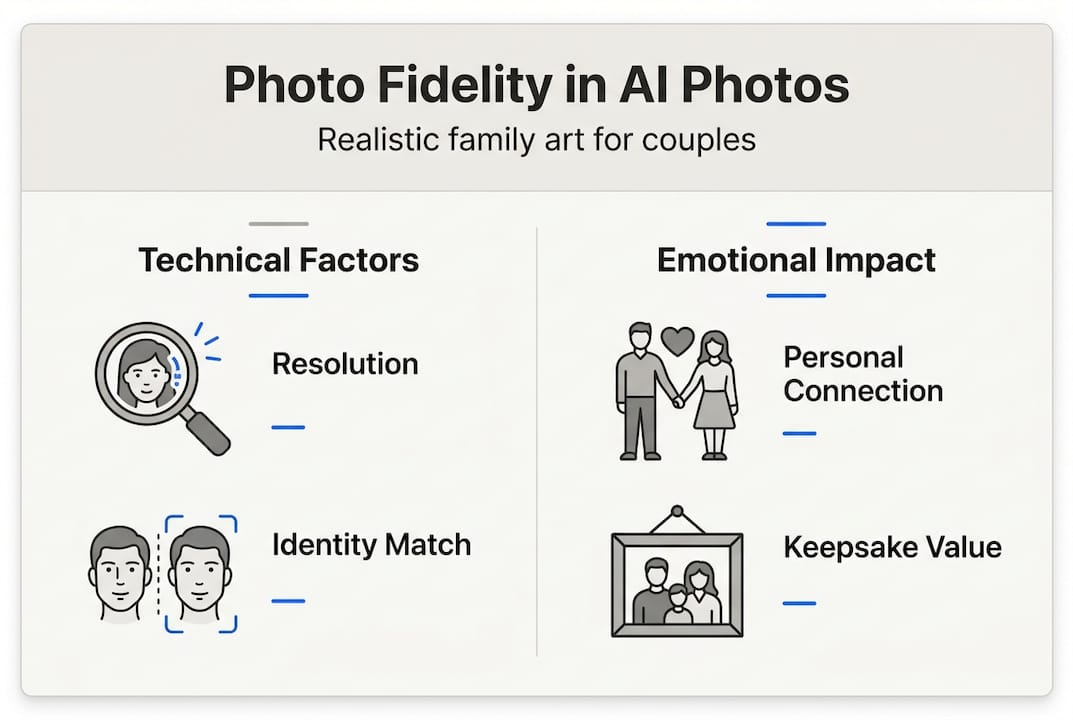
Photo fidelity in AI art means preserving detail, texture, color accuracy, and authentic expression so the final image looks and feels like a real photograph. It’s not just about high resolution or sharp focus. True photo fidelity captures the subtle characteristics that make a person instantly recognizable, from the way light hits their face to the natural warmth in their smile. When AI systems prioritize fidelity, they analyze facial proportions, skin texture variations, hair rendering, and emotional nuance to create images that don’t scream “computer-generated.”
Several technical components work together to achieve high photo fidelity. Resolution determines how much detail the AI can capture and reproduce, while lighting affects depth, dimension, and realism. Identity preservation ensures the person in the AI image actually looks like themselves, not a generic approximation. Emotional nuance captures genuine expressions rather than forced or artificial-looking smiles. Color accuracy reproduces natural skin tones, hair shades, and environmental hues without oversaturation or unnatural tints.
High photo fidelity results in images that resonate on a personal level because they feel real. When you look at a high-fidelity AI couple photo, you see yourself and your partner, not stylized avatars. The image captures your actual features, expressions, and the chemistry between you. This authenticity transforms AI-generated photos from novelty items into meaningful keepsakes worth sharing and preserving.
Key photo fidelity aspects include:
- Detail resolution that captures fine features like freckles, eye color variations, and hair texture
- True likeness preservation that maintains recognizable facial structure and proportions
- Emotion capture that reflects genuine feelings and natural expressions
- Color accuracy that reproduces realistic skin tones and environmental lighting
- Texture realism that shows natural skin, fabric, and background elements
“Accuracy in AI photo generation isn’t just technical precision. It’s about creating images that feel emotionally true and personally meaningful, where every detail contributes to believable, recognizable results.”
How photo fidelity enhances romantic images and couples’ connection
Photo fidelity transforms romantic AI art from generic couple imagery into deeply personal visual celebrations. When AI systems maintain high fidelity, they capture the unique way you and your partner look together, preserving the small details that make your relationship distinctive. High image fidelity strengthens emotional connections by reflecting true expressions and subtle intimacy, creating photos that feel like genuine memories rather than artificial constructs.
The emotional and relational significance of photo fidelity in romantic AI art cannot be overstated. Couples want to see themselves in these images, not idealized strangers. High fidelity ensures that when you generate a romantic sunset photo or winter fairytale scene, the people in that scene are unmistakably you and your partner. This recognition creates emotional resonance and makes the image worth keeping, sharing, and treasuring.
AI systems maintain fidelity through several sophisticated processes. They preserve natural expressions by analyzing facial muscle movements and emotional states from input photos. They capture relationship nuances by understanding how couples interact, their body language, and their unique chemistry. They balance aesthetics and realism by enhancing visual appeal without sacrificing authentic likeness. Advanced algorithms analyze subtle traits like eye shape, smile patterns, and facial asymmetries that make each person unique.
Photo fidelity impacts your experience with AI couple photos in sequential ways:
- Recognition happens first when you immediately identify yourself and your partner without hesitation or confusion.
- Emotional impact follows as the realistic representation triggers genuine feelings and memories.
- Shared memory enhancement occurs when the AI image feels like documentation of a real moment you experienced together.
- Long-term value develops because high-fidelity images remain meaningful over time rather than feeling dated or artificial.
Pro Tip: Provide multiple high-quality photos showing different angles and expressions of both partners. Include clear, well-lit images where facial features are visible and unobstructed. Add personalized prompts describing your relationship dynamic, preferred aesthetic, and specific details you want preserved. The more information you provide, the better the AI can maintain photo fidelity while creating your romantic images.
Photo fidelity’s role in AI family visualizations and future baby images
Photo fidelity becomes even more critical when couples use AI to visualize future family moments or generate baby images. Unlike couple photos where you can compare results to existing pictures, future baby visualizations require the AI to merge traits from both parents realistically. Preserving true likeness and personalized traits ensures believable family and baby AI images that feel plausible rather than generic or cartoon-like.
The challenge with family visualizations is maintaining fidelity to both parents while creating a new, believable person. High-fidelity AI systems analyze facial features, coloring, and structural characteristics from both partners to generate baby images that look like they could genuinely be your child. This isn’t genetic prediction, but it is sophisticated visual interpretation that combines recognizable traits into a cohesive, realistic infant portrait.
| Fidelity Level | Likeness Quality | Realism | Emotional Impact |
|---|---|---|---|
| Low photo fidelity | Generic features, weak resemblance | Artificial appearance, obvious AI generation | Limited emotional connection |
| High photo fidelity | Clear parental traits, believable combination | Natural skin texture, realistic proportions | Strong emotional resonance, meaningful visualization |
Several personalization factors directly influence fidelity in family and baby images:
- Facial feature preservation that captures distinctive traits like nose shape, eye spacing, and jawline structure from both parents
- Skin tone matching that realistically blends parental coloring into believable infant complexion
- Expression consistency that shows natural baby expressions rather than forced or unnatural poses
- Background harmony that places the baby in realistic settings with appropriate lighting and context
When photo fidelity is high, couples report feeling genuine emotional connections to their AI-generated baby images. The visualization feels less like fantasy and more like a glimpse into a possible future. This emotional authenticity makes AI family photos with true likeness valuable for couples exploring parenthood, celebrating pregnancy announcements, or simply dreaming about their future family. The images become conversation starters, keepsakes, and meaningful representations of hopes and plans.
High fidelity also matters for extended family visualizations where AI creates images of couples with children in various scenarios. Whether it’s a family portrait, vacation scene, or holiday celebration, maintaining accuracy in family AI images ensures everyone looks like themselves and the scene feels authentic rather than staged or artificial.
Achieving and selecting high-fidelity AI art: tips for couples
Getting the best photo fidelity from AI-generated images requires strategic preparation and platform selection. Not all AI art tools prioritize realism and identity preservation equally. Some focus on artistic style over accuracy, while others sacrifice likeness for aesthetic appeal. Couples seeking truly realistic, personalized images need to choose platforms specifically designed for high-fidelity results.
Follow these steps to maximize photo fidelity in your AI-generated couple and family images:
- Prepare high-quality input photos with clear facial features, good lighting, and minimal obstructions like sunglasses or heavy shadows.
- Craft detailed prompts that specify desired mood, setting, and style while emphasizing natural appearance and realistic rendering.
- Review AI previews carefully, checking for accurate facial features, natural expressions, and believable proportions before finalizing.
- Use iterative refinement by generating multiple versions and selecting the one with the strongest likeness and emotional authenticity.
- Provide feedback or adjustments to improve specific elements like skin tone, hair texture, or facial symmetry in subsequent generations.
Pro Tip: Choose platforms that explicitly support advanced identity preservation and offer custom editing features. Look for AI systems that mention facial analysis, likeness accuracy, or photorealistic rendering in their descriptions. These platforms invest in the technology needed to maintain high photo fidelity rather than just creating stylized art.
The importance of trusting proven platforms cannot be overstated when creating personalized keepsakes. Technical prompts and identity preservation techniques enhance the realism of AI photos, but only if the underlying AI system is designed for fidelity. Generic AI art generators may produce beautiful images, but they often lack the specialized algorithms needed to preserve true likeness and emotional authenticity.
When evaluating AI platforms, consider their track record with couple and family imagery. Look for examples showing real people rather than generic models. Check whether the platform emphasizes photorealism and identity accuracy in its marketing. Read user reviews mentioning likeness quality and recognition. The best platforms for high-fidelity couple photos will showcase results where people actually look like themselves, not idealized or heavily stylized versions.
Another key factor is understanding how to make AI photos look real through proper input selection and prompt engineering. Avoid heavily filtered or edited input photos, as these confuse the AI about your actual appearance. Use images showing your natural skin texture, true hair color, and genuine expressions. The more authentic your inputs, the more realistic your outputs will be.
Consider the specific use case when selecting fidelity levels. Romantic anniversary photos require different fidelity considerations than playful themed shoots or future baby visualizations. For meaningful keepsakes and family planning visualizations, prioritize maximum photo fidelity. For creative or artistic projects, you might balance fidelity with stylistic elements. Understanding your priorities helps you communicate effectively with AI platforms and achieve results that match your expectations.
Discover high-fidelity AI couple and family photos at PairFuse
PairFuse specializes in creating photorealistic AI couple photos and baby visualizations with exceptional attention to likeness and emotional authenticity. Unlike generic AI art generators, PairFuse focuses specifically on making people in your images look genuinely like themselves, not stylized approximations. The platform uses advanced facial analysis to preserve your unique features, natural expressions, and the chemistry between you and your partner.

Whether you want romantic portraits, seasonal photoshoots, or future baby visualizations, PairFuse delivers high-fidelity results that feel personal and real. The AI couple photo maker offers diverse themes from winter fairytales to sunset romance, all while maintaining recognizable facial identity and natural rendering. The AI baby generator creates realistic infant portraits reflecting visible characteristics from both parents, perfect for couples exploring parenthood or celebrating pregnancy.
Experience the difference that true photo fidelity makes in AI-generated imagery. Create meaningful keepsakes that capture your relationship authentically and visualize your future family with images that genuinely look like they could be real photographs.
FAQ
What is photo fidelity in AI art?
Photo fidelity refers to the accuracy and realism of details, colors, textures, and expressions in AI-created images. It measures how closely the AI-generated photo resembles real photography rather than obviously artificial or stylized art. High photo fidelity means the image looks like it could have been taken with a camera, with natural lighting, realistic skin texture, and authentic facial features.
Why is photo fidelity important for creating AI couple photos?
Photo fidelity ensures AI-generated couple images actually look like you and your partner, not generic strangers. It preserves the unique features, expressions, and chemistry that make your relationship distinctive. High fidelity creates emotionally authentic visuals that feel meaningful and personal, transforming AI art from novelty into genuine keepsakes worth treasuring and sharing.
How does photo fidelity affect AI baby generator results?
High photo fidelity in AI baby generation creates realistic infant portraits that believably combine traits from both parents. It ensures the baby image shows natural skin texture, plausible facial proportions, and recognizable characteristics rather than generic or cartoon-like features. This realism makes the visualization feel more emotionally engaging and personally meaningful for couples exploring parenthood.
How can couples improve photo fidelity in their AI-generated images?
Use high-quality input photos with clear facial features, good lighting, and natural expressions without heavy filters or obstructions. Provide detailed prompts specifying desired mood and setting while emphasizing realistic rendering. Choose AI platforms specifically designed for identity preservation and photorealism rather than generic art generators. Following best practices for AI portraits significantly improves fidelity in final results.
What technical factors contribute to photo fidelity in AI images?
Resolution determines detail capture capability, while advanced facial analysis algorithms preserve unique features and proportions. Lighting simulation creates natural depth and dimension. Color accuracy systems reproduce realistic skin tones and environmental hues. Texture rendering shows natural skin, hair, and fabric details. Emotion recognition captures genuine expressions rather than forced or artificial looks, all working together to achieve photorealistic results.
Recommended
- Why AI photography appeals to couples and families in 2026
- Best AI photo results for couples & babies 2026
- How to Make AI Photos Look Real: The 2026 Guide to 1:1 Identity Preservation
- Why accuracy matters in AI photo generation in 2026
- Artist’s life in 2026: routines, challenges, and trends – The Mansion Press
- What is ultra-realistic backdrop: the ultimate 2026 guide – Instant Backdrops